
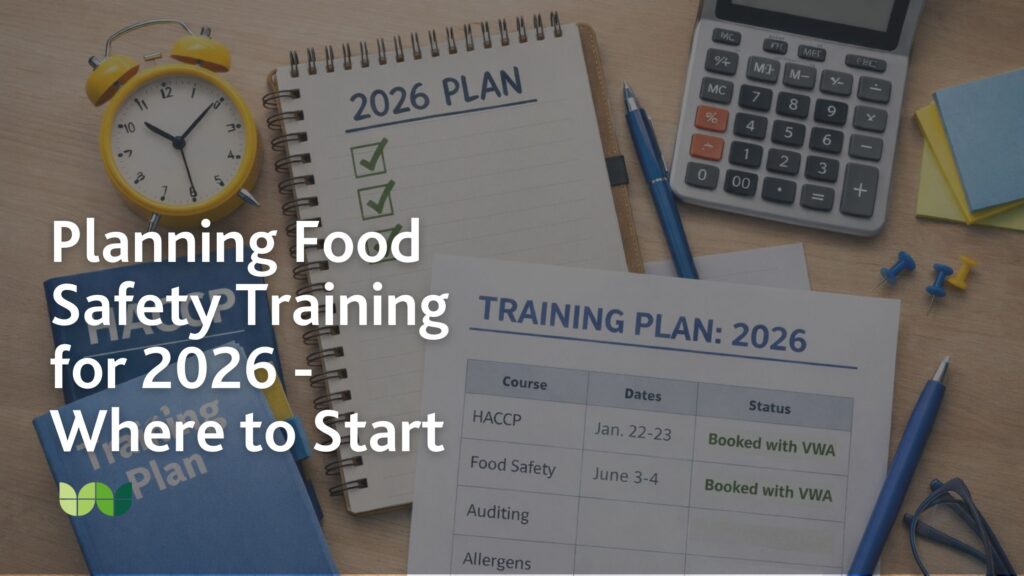
For many food manufacturers, planning your training happens reactively — when a certificate is about to expire, an audit is booked, or a new starter comes onboard. That’s understandable but planning a little earlier can make your year easier to manage and build confidence within your teams.
Here’s a simple, practical guide to help you think about training for 2026 in a way that supports your operations and keeps things running smoothly.
Why Planning Matters in Food Industry training
Food manufacturing environments change constantly — new products, different processes, staff turnover and evolving regulations. Planning training ahead helps you:
- Stay compliant with standards such as BRCGS
- Build confidence in your teams
- Avoid last-minute scheduling stress
- Ensure new and existing staff get the right training at the right time
- Retain momentum in improvement programmes
At VWA, we’ve supported food manufacturers with training and development for over 30 years, helping teams stay prepared and productive throughout the year.
What Typically Drives Training Needs
Most manufacturers find they plan training for one of a few common reasons:
- Upcoming audit or certification reviews
- Certificates nearing expiry
- New starters or role changes
- Changes to processes, products or equipment
- Areas highlighted by internal audits or near-misses
Planning well means addressing these needs before they become urgent.
See all courses here.
Common Challenges We See
When planning training, manufacturers often tell us they struggle with:
- Finding time around production schedules
- Coordinating training across shifts
- Deciding who needs refresher training versus something new
- Keeping track of what’s already been completed
- Fitting training in ahead of audits, rather than just before
These challenges are completely understandable, especially in busy manufacturing environments.
Tips for Planning Training Across the Year
Here are a few practical steps you can take now to make training planning smoother:
Create a simple calendar
Mark audit windows, certificate renewal dates and planned process changes.
Match training to needs
Think about roles and responsibilities — not just courses. For example, new starters may need introductory food safety or HACCP training, while team leaders might benefit from higher-level courses or refreshers.
Spread training across the year
Avoid clustering all training around audit periods. Spreading it out reduces pressure on resources and helps with retention.
Talk with your provider early
Discuss course availability, in-house options or online delivery early in the year to secure dates that suit your production schedule.
Helping You Plan Your Training
Beyond delivering courses, VWA also supports businesses in planning their training for the year. This can include:
- Training Needs Analysis: We review your current training records and audit outcomes to identify gaps and priority areas.
- Annual Training Planning: We help create a simple, practical plan for the year ahead, ensuring all staff have the right training at the right time.
This approach means you can be confident that training is targeted, effective, and aligned with both compliance and operational needs.
Contact Claire Lennon to discuss your training needs for the year. Call 01756 700802 or email claire.lennon@vwa.co.uk
Supporting Your Team in 2026
Getting ahead with training planning doesn’t need to be complicated. Even a simple outline of priorities and timelines can make the year smoother and help your teams stay confident, compliant and up to date with industry expectations.
If you’re thinking about training for 2026 and would like to explore courses or in-house options, take a look at our full course range or get in touch — we’re always happy to help.
Key Areas to Think About for 2026 Training
Different roles and responsibilities require different types of training. Here are some broad areas to consider:
1. Food Safety and Hygiene
A strong foundation ensures that everyone understands essential food safety principles. VWA offers a range of courses from basic food safety through to advanced levels that meet the needs of supervisors and managers.
Explore Food Safety Training here: Food Safety Training
2. HACCP (Hazard Analysis and Critical Control Points)
HACCP remains fundamental to food safety management in manufacturing. Whether it’s introductory training for operatives or more advanced qualifications for HACCP teams and managers, VWA’s RSPH-accredited HACCP courses help teams understand and apply HACCP principles effectively.
See HACCP Training Courses here: HACCP Training
3. Auditing and Internal Assurance
Internal audit skills help you spot issues before they arise during third-party audits. VWA provides auditing courses from introductory auditing skills to FDQ Lead Auditor training, helping your internal teams build and maintain audit competence.
Find Auditing Courses here: Auditing Training
4. Refreshers and Updates
Keeping knowledge current is vital — especially when standards and guidance change. VWA’s Food Safety Update and HACCP Refresher courses provide focused refreshers that keep teams up to date with the latest industry developments and expectations.
Browse refresher and update options: HACCP Refresher Training or Food Safety Update
5. Specialist and Bespoke Training
You might also consider specialist topics such as root cause analysis, food allergens, labelling, or tailored in-house training designed to meet your specific requirements — all of which VWA can provide.
Browse refresher and update options: Specialist Courses